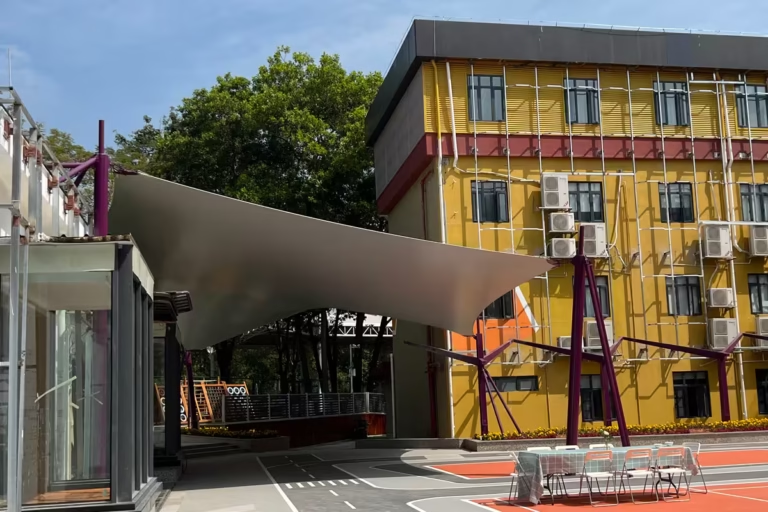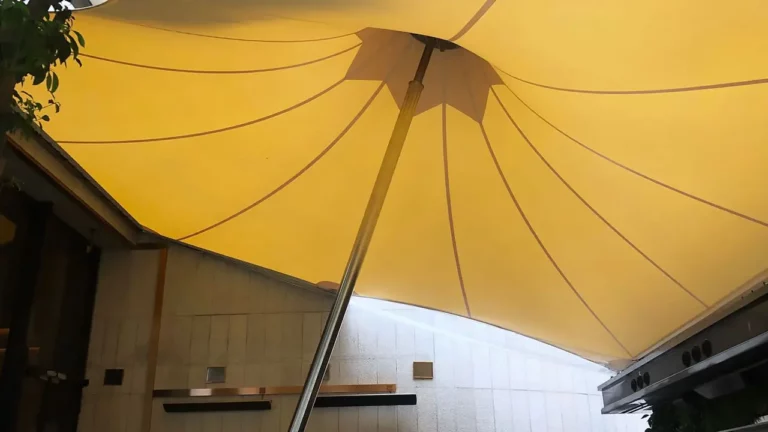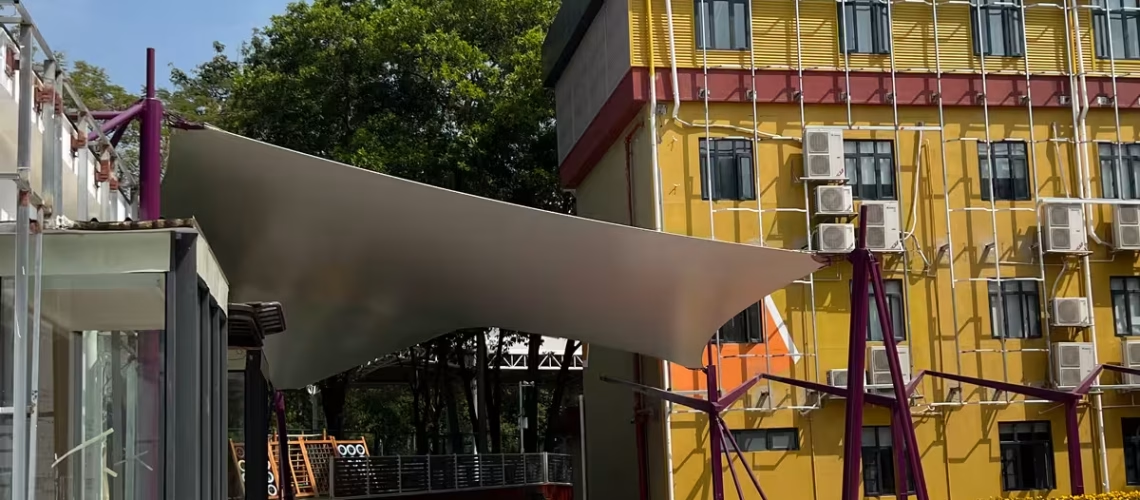
The Ultimate Guide to Tensile Membrane Materials: Comparing PVC, PTFE, and ETFE for Modern Architecture
1. Introduction to Tensile Membrane Structures
Tensile membrane structures represent a paradigm shift in the architectural envelope, moving away from heavy, mass-based construction toward lightweight, high-performance skins. At their core, these systems are defined by their unique thermodynamic interaction with the environment: they exhibit high sun reflectivity and remarkably low absorption of sunlight. In an era where energy performance and climate resilience are paramount, the material choice for a tensile structure is not merely an aesthetic decision but a critical engineering calculation.
The core benefits of adopting these advanced material systems center on significant energy reduction. By reflecting a vast majority of the solar spectrum, these membranes mitigate heat gain, preventing thermal energy from penetrating the building’s interior. This reduces the cooling load on HVAC systems, particularly in large-span structures like stadiums or airports where traditional glazing would create a greenhouse effect. Furthermore, the translucency of these materials—ranging from the soft diffusion of PTFE to the near-total transparency of ETFE—harnesses natural daylight to eliminate the need for artificial lighting during the day, drastically lowering operational electrical costs.
As a Senior Architectural Materials Consultant, I have seen many projects falter by treating “fabric” as a monolithic category. This guide serves as a deep dive into the technical nuances of the “Big Three”—PVC, PTFE, and ETFE—alongside specialty fabrics like Tenara and Silicon Coated Glass. By examining lifespans, fire ratings, thermal values, and maintenance requirements, this document provides the granular data needed for non-experts and professionals alike to make informed, long-term structural decisions.
2. The “Big Three”: Core Material Profiles
2.1 PVC (Polyvinyl Chloride) Coated Polyester
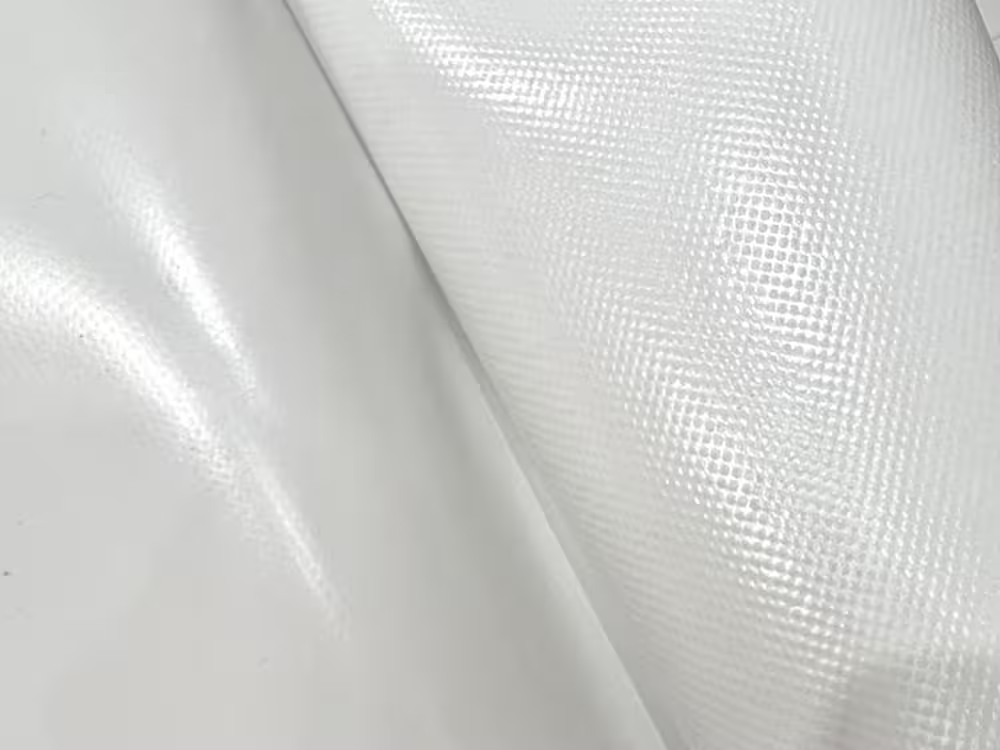
PVC-coated polyester is the most prevalent material in the industry, primarily due to its versatility and “budget-friendly” price point. It consists of a woven polyester base cloth (the scrim) that provides tensile strength, which is then coated on both sides with heavily plasticized PVC to provide protection and water resistance.
- Lifespan and Lacquer Implications: The durability of PVC is dictated almost entirely by its topcoat or lacquer. A standard Acrylic lacquer generally offers a lifespan of 10 to 15 years. However, architects looking for better return on investment (ROI) often specify PVDF (Polyvinylidene Fluoride) lacquers. A weldable PVDF lacquer extends the service life to 15–18 years, while a non-weldable PVDF lacquer—which requires the lacquer to be sanded off at the seams before welding—can reach a 18–20 year lifespan. The “Senior Consultant” perspective here is that while non-weldable PVDF increases labor costs during fabrication, the reduced maintenance and extended replacement cycle offer superior long-term value for commercial clients.
- Flexibility and Forming: PVC is noted for its high flexibility. It can be easily manipulated into complex anticlastic or synclastic curvatures, making it the material of choice for creative, geometric structures.
- Fire Performance: PVC typically maintains a “Good” fire rating (e.g., BS7837: 1996). While it is self-extinguishing, stakeholders must account for the fact that it can emit smoke during a fire event, which may impact life-safety design in enclosed spaces.
- Construction Mechanics: PVC is joined using High Frequency (HF) welding or industrial sewing. HF welding creates a molecular bond between the PVC coatings, resulting in a seam that is often stronger than the fabric itself.
2.2 PTFE (Polytetrafluoroethylene) Coated Fiberglass
PTFE-coated fiberglass is the “gold standard” for permanent tensile architecture. Often referred to by the brand name Teflon, this material utilizes a woven glass fiber base cloth coated with plasticized PTFE.
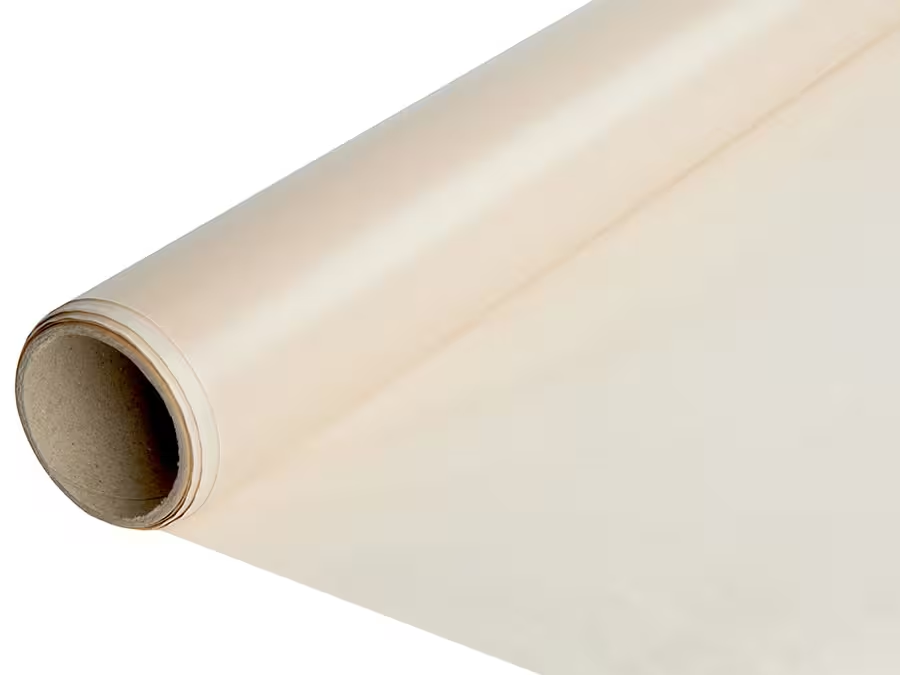
- Longevity and Resilience: PTFE is a premium, permanent solution with a documented lifespan of 25 to 30+ years, and many installations exceed 40 years. Its primary advantage is that it is chemically inert; it does not degrade under UV radiation or react with atmospheric pollutants.
- The Bleaching Phenomenon: A common point of confusion for project managers is the material’s color on delivery. On the roll, PTFE typically appears as a sepia or brownish-tan color. However, upon installation and exposure to sunlight, the material undergoes a bleaching process that turns it a brilliant, lasting white. Clients must be educated on this “sepia-to-white” transition to avoid concerns during the installation phase.
- Fire Rating and Safety: PTFE holds an “Excellent” non-combustible fire rating, typically achieving Class A or Class 0 status (BS 476). This makes it the only viable choice for high-occupancy public structures like airports and stadiums where strict building codes mandate non-combustibility.
- Maintenance and Construction: PTFE is inherently self-cleaning. Its low-friction surface allows rain to wash away accumulated dirt. Structurally, it is stiffer than PVC and cannot be HF welded; instead, it is bonded using hot melt FEP (Fluorinated Ethylene Propylene) strips under high heat and pressure.
2.3 ETFE (Ethylene-Tetrafluoroethylene) Film
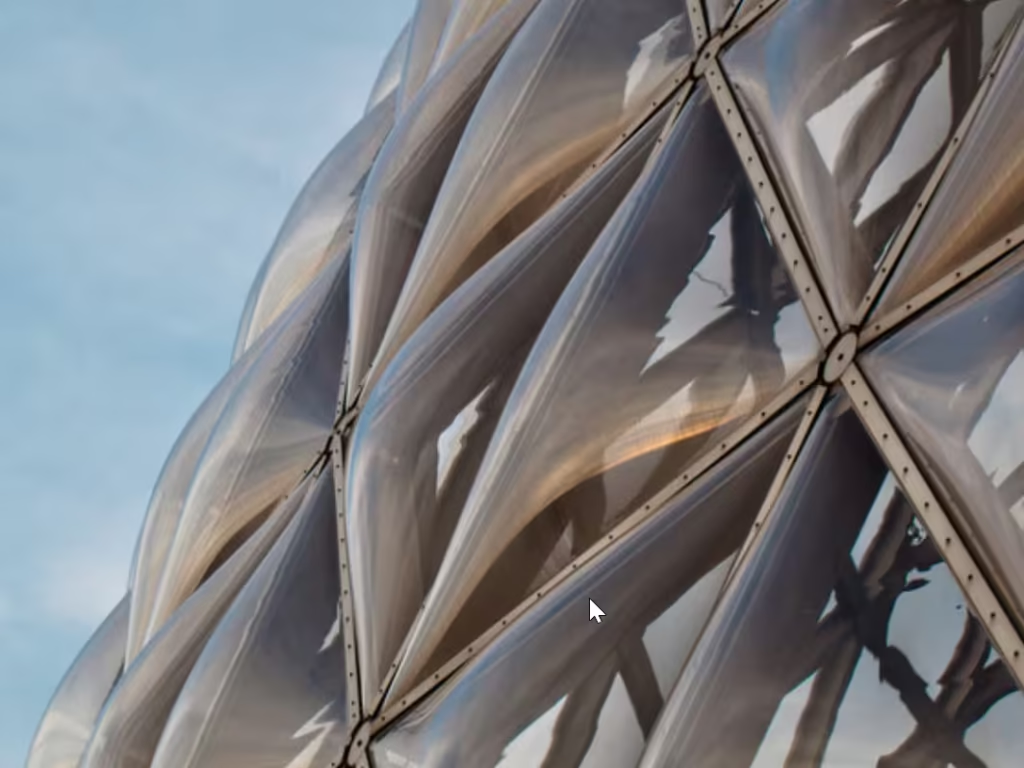
ETFE is not a fabric in the traditional sense; it is a transparent fluoropolymer film. Originally developed for the aerospace industry, it has become a favorite for “iconic” architecture.
- Transparency and Aesthetics: ETFE offers high transparency, allowing up to 95% to 98% light transmission. This makes it a direct lightweight alternative to glass. It can be utilized as a single skin or, more commonly, as multi-layer inflated cushions (pneumatic systems) to provide insulation.
- Physical Strength and Temperature: Despite its delicate appearance, ETFE is incredibly robust, with an exceptional lifespan of 25–35+ years. It maintains its structural integrity across a vast temperature range, from -200°C to +150°C, making it suitable for both arctic and tropical environments
- Weight Advantage: At only 0.15–0.35kg/m², ETFE is a fraction of the weight of glass and significantly lighter than coated fabrics. This reduces the dead load on the supporting steel or cable structure, allowing for more slender and daring architectural designs.
3. Comparative Property Analysis
To facilitate technical decision-making, the following table synthesizes data from across the source documentation.
| Property | PVC (Polyvinyl Chloride) | PTFE (Polytetrafluoroethylene) | ETFE (Ethylene-Tetrafluoroethylene) |
|---|---|---|---|
| Material Type | Coated Polyester Fabric | Coated Fiberglass Fabric | Transparent Fluoropolymer Film |
| Transparency % | Opaque (5–15%) | Semi-translucent (10–15%) | Highly Transparent (Up to 95%) |
| Solar Reflectance % | 75–78% (Specialty: 86%) | 72–75% (Specialty: 78%) | 5–60% (Depends on printing) |
| Solar Absorption % | 13–22% | 10–12% | 1–2% |
| Fire Rating | Good (Self-extinguishing) | Excellent (Non-combustible) | Excellent (Self-extinguishing) |
| Lifespan | 10–20 Years | 25–30+ Years | 25–35+ Years |
| Weight | Heavy (~0.5–1.5 kg/m²) | Heavy (~0.9–1.8 kg/m²) | Very Light (~0.15–0.35 kg/m²) |
| Flexibility | High (Highly formable) | Moderate (Stiff) | High (Flexible film) |
| Cost Level | Low to Moderate | High | Moderate to High |
Strength vs. Weight Analysis
In tensile engineering, the strength-to-weight ratio determines the feasibility of large-span structures. ETFE film is a technical marvel in this regard; it is physically stronger than PTFE by weight while being significantly lighter. This allows engineers to span massive areas—such as greenhouses or large atrium covers—with minimal structural support. PVC, while heavy, offers high tear strength which is vital for temporary or touring structures that undergo frequent tensioning and striking cycles.
4. Energy Efficiency and Lighting Performance
4.1 Solar Performance and Thermal Efficiency
The “Summary of Energy Use and Lighting Performance” data reveals significant differences in how these materials manage solar radiation.
- Solar Reflectance: PVC membranes exhibit the highest baseline reflectance at 75–78%, which can be pushed to 86% with nano-coatings. PTFE sits in the 72–75% range. High reflectance is the primary driver for reducing the “Urban Heat Island” effect in metropolitan projects.
- Solar Absorption: This is a critical metric for heat transfer into the building. PVC absorbs between 13% and 22% of solar energy, whereas PTFE is more efficient at 10–12%. ETFE film, due to its transparency, has a negligible absorption rate of 1–2% for the film itself, though the heat gain is managed through transmission controls.
- G-Value (Solar Heat Gain Coefficient): This measures the fraction of external solar radiation admitted through the membrane. PVC is highly efficient at blocking heat, with a G-Value of only 8–14%. PTFE follows at 14–28%. ETFE’s G-Value is highly variable: a single layer allows up to 80% heat gain, but a triple-layer system with silver frit printing can reduce this to 50%.
- U-Value and R-Value Performance: Standard membranes are poor insulators. PVC has a U-Value of 5.6 W/m²K and an R-Value of 1.0 (FT2hrF/BTU). PTFE is slightly less efficient with a U-Value of 7.2 W/m²K and an R-Value of 0.78.
4.2 Insulated Systems and Advanced Solutions
To meet modern building codes in extreme climates, insulated systems like Tensotherm™ are required. These systems incorporate an aerogel insulating blanket between membrane layers.
- Tensotherm™ Performance:
- 8mm System: Achieves a U-Value of 1.14 W/m²K and an R-Value of 4.9.
- 24mm System: Drastically improves performance to a U-Value of 0.55 W/m²K and an R-Value of 10.1.
- Solar Absorption: Interestingly, these insulated systems have a high absorption rate of 55–73%, as they are designed to trap and manage thermal energy rather than simply reflecting it.
- Multi-layer ETFE: The thermal efficiency of ETFE is improved by creating “cushions.” A single layer has a U-Value of 5.8 W/m²K (R-Value 0.80). Moving to a double layer drops the U-Value to 3.0 (R-Value 1.9), and a triple layer reaches 2.0 W/m²K (R-Value 2.8)
5. Strategic Use Cases and Applications
5.1 Budget-Friendly & Temporary
Material: PVC Coated Polyester For car parks, covered walkways, and modular canopies, PVC is the logical choice. Its low cost (approx. 1/4 the cost of PTFE off the roll) makes it ideal for projects with a 10–15 year horizon. Furthermore, its ability to be sewed or HF welded makes it perfect for “touring structures” that need to be relocated.
5.2 Permanent & Large-Span
Material: PTFE Coated Fiberglass PTFE is the prerequisite for stadiums and airports. Its non-combustibility is a legal requirement for high-occupancy roofs. Its “Excellent” durability ensures that the massive investment in the supporting steel structure is protected by a skin that will last three decades or more.
5.3 Iconic & Transparent Architecture
Material: ETFE Film Used in projects like the Eden Project or Allianz Arena, ETFE is selected for its “glass-like” appearance and iconic visual impact. It is the material of choice for greenhouses and facades where natural light is the primary design driver.
5.4 Extreme Environments
- Coastal Areas: PTFE and ETFE are mandatory here. They are inert and highly resistant to salt spray and chemical corrosion which would degrade the plasticizers in standard PVC.
- Cold/Snowy Climates: ETFE is specifically recommended because its smooth, low-friction surface allows snow to slide off easily, preventing the dangerous accumulation of “snow loads” that can threaten structural integrity.
- Hot/Sunny Climates: High-reflectance PVC with nano-coatings (86% reflectance) is the most effective at keeping interior spaces cool under intense direct solar radiation.
6. Specialty Fabrics and Advanced Membranes
6.1 Silicon Coated Glass
This material utilizes a woven glass fiber base cloth coated with silicon. It is a long-term solution (35+ years) bonded with hot melt mastic strips. It offers a unique aesthetic and high translucency: 21% for Type 2/3 (1,165gm/m²) and up to 41% for lighter Type 1 (595gm/m²).
6.2 Tenara (Woven PTFE)
Tenara is the “luxury” option in tensile membranes. It is made from woven extruded PTFE filaments coated with a 100% fluoropolymer film.
- Translucency: At 45%, it provides unparalleled light diffusion.
- Durability: 35+ year lifespan and is completely colorfast (no fade).
- Cost: It is approximately 10 times the cost of Type 1 PVC, making it unsuitable for most budget-conscious projects but ideal for high-end bespoke architecture.
6.3 Ancillary Materials
- HDPE Shade Cloth: A monofilament mesh with a 10-year lifespan. It is budget-friendly and allows for 4–20% translucency depending on color. It is the primary material for touring shade structures.
- PU Coated Glass: A glass fiber cloth with a one-sided Polyurethane coating. It is specifically designed for backlit applications with 20% translucency.
- PVC Coated Glass Mesh: Boasting a 15–20 year lifespan, this mesh is highly printable with UV-cured inks. It is often used for decorative building wraps or branded facades.
- Polyester Trevira: A natural product that is fully recyclable. While its lifespan is short (up to 5 years), it is inherently flame retardant (IFR) or can be “Probanised” to meet BS5867 2B standards.
7. Environmental Impact, Maintenance, and Sustainability
7.1 Maintenance Requirements
The “Senior Consultant” perspective on maintenance is simple: if the budget allows for PTFE or ETFE, the long-term maintenance costs will be lower. These materials are naturally self-cleaning. PVC requires “Moderate” regular cleaning because, over time, plasticizers can migrate to the surface, causing the whiteness to dull as it attracts dirt. UV stabilizers can limit this, but they do not eliminate it entirely.
7.2 Sustainability and Recycling
Sustainability in tensile membranes is a regional and material-dependent issue.
- PVC: Modern European manufacturers have removed harmful phthalates and heavy metals from their processes. In terms of end-of-life, recycling varies by infrastructure. In Italy, PVC can be reprocessed back into polyester yarn and granules. In the UK, it is more commonly shredded for use in secondary “low-grade” products like traffic cones, park benches, and soft kerbstones.
- PTFE: While the material is theoretically recyclable, its low global volume makes specialist reprocessing difficult. It is often shredded for landfill. However, because it contains no Chlorine or Bromine, it does not leach harmful chemicals during decomposition.
- ETFE: This material is fully recyclable and has a significantly lower carbon footprint than its competitors due to its light weight and lower energy requirements for transportation and installation.
8. Conclusion: Choosing the Right Membrane
The selection of a tensile membrane material is a balancing act between three pillars: Budget, Longevity, and Performance.
For projects where the bottom line is the primary driver and a 15-year life is acceptable, PVC remains the industry standard. For permanent infrastructure where fire safety and 30-year durability are non-negotiable, PTFE is the only choice. For architects seeking to push the boundaries of transparency and form, ETFE film offers a lightweight, high-performance alternative to traditional glazing.
Quick Comparison Summary:
- PVC: Budget-friendly solution; 10–15+ year lifespan; opaque (5–15% light); ideal for general purpose canopies.
- PTFE: Premium permanent solution; 25–30+ year lifespan; non-combustible; ideal for large-span stadiums and airports.
- ETFE: Ultra-lightweight and transparent; 25–35+ year lifespan; 95% transparency; best for glass-like iconic structures.
- Tenara: Top-tier luxury fabric; 35+ year lifespan; 45% translucency; 100% colorfast and inert.